Ninety days is a sweet spot. It is long enough to change something real, such as a habit, a skill, a savings balance or a product milestone, and short enough that the end stays in sight. It is also long enough to lose interest in the middle. Here is a method that keeps the middle alive.
1. Fix the dates before the goal
Pick the start day and work out the end day, rather than saying “in about three months”. The date in 90 days calculator gives the exact date, with its weekday. A fixed end date turns a wish into a deadline.
2. Make the goal measurable
“Get fit” cannot be checked. “Run 5 km without stopping” can. For a team, “improve onboarding” becomes “new hires ship their first change in their first week”. If you cannot tell on day 90 whether you succeeded, rewrite the goal.
3. Split it into checkpoints
Ninety days is thirteen weeks. Put a checkpoint every two to three weeks and give each one a small, visible outcome:
- Day 30: the routine is set and the first measurement is taken.
- Day 60: halfway proof, a number that has moved.
- Day 90: the result, compared with the starting point.
Checkpoints are where motivation dips get caught early. If the day-30 checkpoint is missed, you have two months left to adjust, not two weeks.
4. Make progress visible
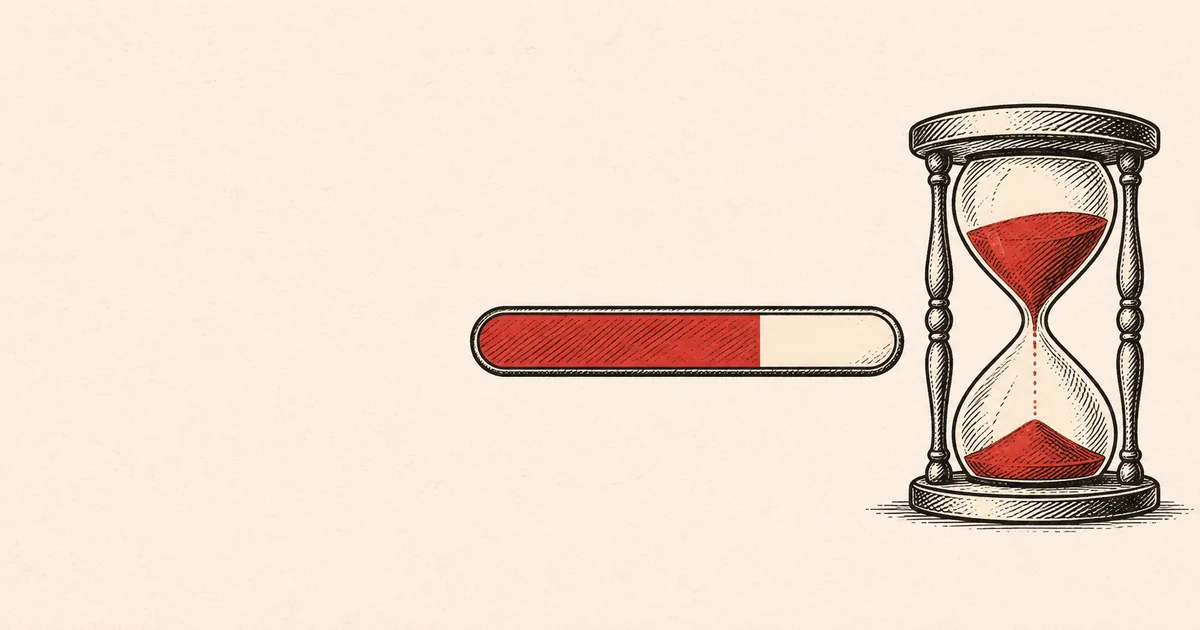
What you can see, you keep doing. A progress bar showing “day 41 of 90, 45% done” is more motivating than a vague feeling of “somewhere in the middle”. It also stops the common mistake of starting strong and fading, because the bar keeps moving whether you feel like it or not.
To set it up, create an event with your start and end dates. The page updates itself every day. The “Create a countdown” button on the calculator opens the form with both dates already filled in.
5. Keep one weekly habit
Pick a fixed moment each week, say Sunday evening or Monday morning, and do three things in five minutes: look at the bar, note what moved, choose the one thing for the coming week. Consistency matters more than intensity.
6. Share it, with the right people
A goal told to someone is harder to drop. Share the page with one friend, a coach or your team rather than the whole world.
- Personal goals: one accountability partner who can open the link whenever they like.
- Team objectives: pin the page in the team channel or embed it in your workspace. See how to add an event to Notion for the embed.
- Manager updates: the page replaces a status line in your weekly update. Read track project milestones for the project version.
7. Plan for the dip
Most people hit a slump between week four and week eight. Expect it. Decide in advance what the minimum version of the habit is, for instance ten minutes instead of thirty, and keep that going through the slump. A shrunk day still counts, and the bar moves anyway.
A short checklist
- Exact start and end dates.
- A goal you can verify on the last day.
- Checkpoints at day 30 and day 60.
- A visible progress bar.
- One weekly five-minute review.
- One person or one team who can see it.
- A minimum version for bad weeks.
Ready to start? Create your 90-day page and pick today as the first day.